Survey Questions: Feedback
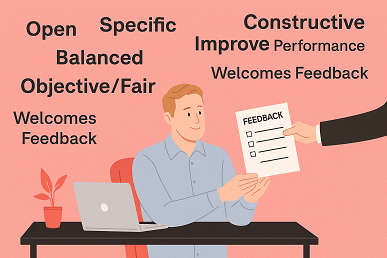
Definition: Feedback is a structured and continuous process where individuals provide specific, balanced, and constructive insights based on observable behaviors to improve performance and promote learning. By fostering a culture of openness, active listening, and accountability, employees and leaders engage in meaningful exchanges that enhance decision-making, professional development, and operational effectiveness. Through timely assessments, coaching, and diverse perspectives, organizations cultivate an environment of trust, integrity, and support, ensuring feedback drives growth and long-term success.
Job Satisfaction
Decision Making
Problem Solving
Critical Thinking
Adaptability
Planning
Innovation
Time Management
Job Content and Design
Goals
Feedback
Security
Risk Management
Quality
Pay
Benefits
Systems
Equipment
Technical Skills
Technology Use/Management
Feedback/Guidance
Performance
Performance Appraisal/Management
Safety
Stress
Work/Life
Job Security
Customer Service
Giving Feedback
Specific
Specific feedback emphasizes clarity, precision, and behavioral anchoring. It is grounded in observable facts, structured formats (like SBI: Situation-Behavior-Impact), and concrete examples that link performance directly to role expectations, KPIs, or project outcomes. Specific feedback avoids generalizations and emotional interpretations, instead focusing on what was seen, when it occurred, and how it impacted results. It helps employees understand exactly what behavior is being referenced and why it matters, often supported by data, benchmarks, or documented observations. This dimension ensures that feedback is not only accurate but also tailored to the individual's role, level, and goals--making it actionable and measurable.
- My manager focuses on specific behaviors or actions rather than general comments.
- The project leader provides clear and specific feedback based on observable behaviors.
- My manager uses concrete examples to illustrate patterns, not just isolated incidents or anecdotes.
- My manager bases feedback on observable facts and behaviors, not personal opinions or emotions.
- My supervisor bases feedback on observable/observed behaviors or specific instances.
- The supervisor links feedback directly to specific role expectations, kpis, or project outcomes.
- My team assesses job performance against set objectives and benchmarks, pinpointing opportunities for enhancement.
- The supervisor uses data, metrics, or documented observations to support employee feedback.
- The project manager avoids generalizations by tailoring feedback to the individual's role, level, and goals.
- Managers use structured format (e.g., SBI: Situation-Behavior-Impact) to enhance clarity and specificity.
Constructive
Constructive feedback centers on developmental intent and emotional intelligence. It is designed to help employees grow by addressing behaviors in a respectful, supportive manner that avoids personal judgment. Constructive feedback clarifies expectations, encourages reflection, and frames mistakes as learning opportunities. It often includes guidance, encouragement, and shared experiences that foster improvement over time. Where specific feedback answers what and when, constructive feedback focuses on how to improve and why it matters for long-term development. It builds safety and trust, enabling employees to receive feedback as a resource for growth rather than a threat to identity.
- The project leader enables employees to improve performance by providing feedback.
- My supervisor helps individuals reflect on their experiences and learn from their mistakes.
- My manager addresses specific actions or behaviors, rather than making it about the person's character.
- My manager clarifies what is expected in terms of performance and behavior.
- My division improves employees on an ongoing basis through constructive feedback.
- Supervisors provide constructive feedback geared towards helping employees grow and develop their skills.
- Our department delivers feedback in a respectful and supportive manner.
- The project lead shares past experiences with others as learning opportunities.
Feedback to Improve Performance
Feedback to Improve Performance focuses on the intent and impact of feedback--specifically how it drives individual and team growth. This dimension emphasizes actionable guidance, coaching, and alignment with role expectations, KPIs, and organizational goals. It includes both recognition of strengths and identification of areas for improvement, always with the aim of enhancing performance. Managers operating in this space use feedback as a developmental tool, offering tailored support, reinforcing accountability, and helping employees reorient behaviors to achieve better outcomes. The emphasis is on clarity, practicality, and follow-through--turning feedback into measurable progress.
- Managers use feedback as a catalyst for development, aligning suggestions with role expectations and organizational goals.
- Improvement strategies are integrated with ongoing coaching and performance conversations.
- Leaders translate observations into actionable next steps that enhance our individual and team performance.
- My department combines constructive feedback with tailored support to drive meaningful progress.
- The company provides feedback to help employees reorient their behaviors to improve performance.
- Our department fosters a sense of accountability in performance.
- The team leader addresses specific issues and provides constructive advice, feedback, and helps individuals improve their performance.
- My supervisor recognizes my strengths and identifies areas where improvement is needed.
- My manager offers clear, practical guidance to help others improve performance and grow professionally.
- Leaders recognize and reinforce positive behaviors and achievements as positive reinforcement.
- My manager provides actionable suggestions and support for improvement.
Timely
- The project leader provides feedback as soon after the event as possible.
- Our manager schedules regular check-ins to ensure feedback is ongoing, even between formal reviews.
- Supervisors provide feedback in a timely manner to help employees understand their strengths and areas for improvement while the events are still fresh in their minds.
- My supervisor completes assessment forms in a timely manner.
- My supervisor provides frequent and effective feedback to subordinates.
- The project manager initiates feedback conversations promptly following key events or milestones.
- Our team adheres to all deadlines in the on-line feedback process.
- The project leader demonstrates urgency in addressing behavioral or performance gaps before they escalate.
- My supervisor responds quickly to performance concerns or achievements, avoiding unnecessary delays.
Balanced
Balanced feedback emphasizes the tone, structure, and emotional impact of the feedback conversation. It ensures that both strengths and areas for improvement are acknowledged, creating a well-rounded and affirming experience for the recipient. Managers who practice balanced feedback intentionally begin with what the employee is doing well to foster psychological safety and engagement, then transition to developmental opportunities. This approach helps employees feel valued while remaining open to growth, and it reinforces a culture of appreciation alongside accountability.
- The project manager acknowledges both strengths and areas for improvement.
- My supervisor provides feedback to others that includes both their strengths and weaknesses.
- Managers include both positive feedback and areas for improvement.
- The team leader offers both positive and negative feedback to provide a well rounded assessment of the individual.
- My manager begins feedback with what the recipient is doing well to set a positive tone that helps them feel valued.
Objective and Fair
Objective and Fair feedback focuses on the credibility, neutrality, and rigor of the feedback process itself. It emphasizes the use of multiple sources, observable behaviors, and performance standards to ensure that feedback is accurate, role-relevant, and free from bias. Managers practicing objectivity invite dialogue, avoid personal judgments, and ground their assessments in documented outcomes and expectations. Objective and fair feedback strengthens trust in the system by ensuring that evaluations are equitable, transparent, and aligned with organizational goals.
- Our department evaluates work performance against established goals and standards, identifying areas where improvements can be made.
- My manager focuses constructive criticism on specific behaviors or outcomes rather than personal attributes.
- The project manager ensures that the feedback is related to the recipient's role and responsibilities.
- My department leverages feedback from multiple sources to offer a comprehensive perspective on the employee.
- My supervisor invites the recipient to share their perspective and ask questions.
Receiving Feedback
Seeks Feedback
Seeks Feedback focuses on actively requesting feedback from a broad range of individuals to gain diverse insights for decision-making and personal development. This dimension highlights openness to constructive criticism, engaging with various stakeholders, and ensuring feedback is consistently sought to refine performance. It prioritizes initiative and learning, reinforcing the value of proactively gathering perspectives.
- Colleagues seek feedback from team members, senior leaders, and external stakeholders to gain diverse perspectives and insights that inform decision-making and strategy.
- My supervisor seeks out constructive criticism and praise from colleagues, supervisors, and team members.
- My manager seeks feedback from others.
- My supervisor seeks feedback from team members, senior leaders, and external stakeholders.
- Our team solicits feedback from others.
- My supervisor seeks input from others, asking for their perspectives and suggestions on how to improve.
- The department head seeks a more comprehensive understanding of abilities and identifies specific areas for improvement.
- My manager seeks input from team members, senior leaders, and external stakeholders to harness diverse perspectives and insights for informed decision-making and strategic planning.
- Employees are not embarrassed to ask for an opinion.
- My supervisor seeks feedback to enhance performance.
Welcomes Feedback
Welcomes Feedback emphasizes actively embracing feedback with a positive mindset and using it as a tool for self-reflection and growth. This dimension centers on viewing feedback as an opportunity to improve, recognizing its value in professional development, and fostering self-awareness. It prioritizes enthusiasm and growth, ensuring individuals seek out and integrate feedback as part of their continuous learning journey.
- Team members embrace feedback with a growth mindset.
- Our team willingly receives feedback and uses it to recognize strengths and address gaps.
- Associates welcome feedback as a catalyst for self-reflection and development.
- Employees in my department welcome feedback from others about strengths and areas for improvement.
- Associates embrace feedback from others on their own strengths and shortcomings.
- Coworkers will openly accept feedback to better understand both their strengths and development needs.
- Coworkers in my department embrace feedback to help to build self-awareness.
- Employees welcome feedback as a valuable experience.
Diversity of Perspectives
Diversity of Perspectives centers on the source and inclusivity of feedback. It reflects a commitment to gathering input from a wide array of voices (peers, supervisors, external stakeholders, customers, and industry experts) to ensure feedback is well-rounded, representative, and innovative. This dimension values multiple viewpoints, encourages cross-functional insight, and fosters psychological safety by ensuring all voices are heard. While it may contribute to performance improvement, its primary focus is on enriching the feedback process through inclusivity, collaboration, and strategic breadth. It strengthens decision-making, equity, and cultural intelligence by embedding diverse perspectives into how feedback is collected and applied.
- Colleagues gather input from team members, senior leaders, and external stakeholders to obtain varied perspectives and insights that guide decision-making and strategy.
- Our department seeks contributions from diverse sources to ensure all voices are valued and different viewpoints are incorporated.
- Colleagues involve external stakeholders, such as customers, partners, and industry experts, to bring in fresh perspectives and innovative ideas.
- My supervisor seeks out and applies feedback from multiple channels.
- My team seeks and values feedback from a variety of sources, including peers, supervisors, and external stakeholders.
- Our department seeks and utilizes data from several sources.
- Senior executives seek input from diverse sources to ensure all perspectives are acknowledged and different viewpoints are taken into account.
- Coworkers in my department solicit input from various sources to ensure that all voices are heard and that different viewpoints are considered.
- Managers gather and integrate feedback from diverse sources.
- My team seeks and incorporates feedback from various sources.
- Coworkers seek out different perspectives on important issues.
- My manager gathers and embeds feedback from a wide array of sources.
Selects Feedback Givers
Selects Feedback Givers emphasizes carefully choosing the most appropriate individuals--such as peers, customers, or supervisors--to provide relevant and meaningful feedback. This dimension centers on structured feedback methods like 360-degree reviews, strategic selection of input providers, and ensuring feedback comes from sources that offer valuable insights. It prioritizes precision and relevance, ensuring feedback is collected effectively from those best positioned to provide informed perspectives.
- My manager asks others for their ideas and opinions.
- Leaders invite and value input from others to gain a more comprehensive understanding of their abilities and areas where they can develop further.
- Coworkers select an appropriate set of individuals (peers, subordinates, customers) to provide feedback through a 360-feedback system.
- My team leader engages with team members, senior leaders, and external stakeholders to gather a variety of perspectives and insights that inform strategy and decision-making.
- I am able to identify individuals to provide feedback who can offer meaningful, informed perspectives.
- Associates look to others for input.
Open
Open focuses on being receptive to feedback from various sources and ensuring an approachable attitude toward constructive insights. This dimension highlights listening to different viewpoints, considering suggestions, demonstrating visibility and accessibility, and fostering an environment where feedback can be shared freely. It prioritizes availability and willingness, ensuring that individuals and leaders are receptive to diverse perspectives and insights.
- Coworkers are open to receiving feedback.
- My manager is visible and approachable.
- My manager is open to receiving insights from others about their strengths and areas needing development.
- The project manager accepts the views of others.
- My team leader is easy to approach with ideas and opinions.
- My supervisor open to the suggestions of others.
- Supervisors are willing to consider different viewpoints and understand that diverse perspectives can offer valuable insights.
- My team is willing to listen and consider feedback from colleagues, supervisors, and other stakeholders.
- Supervisors consider other's opinions and suggestions.
- Managers are receptive to feedback from others regarding both strengths and weaknesses.
- My manager accepts constructive criticism and praise from others regarding strengths and weaknesses.
- The project leader open to feedback, new perspectives, continuous learning and self-development.
Continuous Learning
Continuous Learning within the feedback dimension emphasizes an ongoing, proactive commitment to growth. It reflects how individuals and teams use feedback not just as a momentary input, but as a sustained mechanism for development. This includes integrating feedback into coaching conversations, tracking progress over time, and aligning improvement efforts with professional goals and organizational standards. Continuous learning is future-oriented--it's about building capability, fostering a culture of development, and reinforcing feedback as a tool for advancement. It often involves structured support, such as training, goal-setting, and performance planning, to ensure that feedback leads to tangible growth.
- Employees in my department demonstrate a commitment to personal and professional growth through open acceptance of feedback results.
- My team uses performance feedback as a tool for employee development.
- My manager demonstrates a firm commitment to continuous learning and self-improvement.
- Our department identifies specific steps to improve based on feedback and tracks progress over time.
- Associates engage in a proactive approach to feedback to foster a culture of continuous learning and development.
- Supervisors create an environment that values continuous learning and improvement.
- Associates use feedback appropriately for professional development.
Active Listening
Active Listening within the feedback dimension emphasizes the receptive and relational aspects of the feedback process. It reflects a manager's ability to be fully present, open, and non-defensive when receiving input--whether positive, negative, or constructive. This includes behaviors like allowing others to speak without interruption, asking clarifying questions, showing appreciation for the feedback, and keeping the conversation focused on solutions rather than blame or justification. Active listening fosters psychological safety, builds trust, and signals that feedback is valued. It's about creating space for dialogue and understanding before any action is taken.
- In our department, feedback is welcomed as a springboard for progress without deflecting or assigning fault.
- My supervisor listens actively and constructively, keeping the dialogue centered on solutions and future growth.
- My supervisor shows appreciation for the feedback that is given, even when it's difficult to hear.
- My supervisor gives full attention to the feedback provider.
- My manager allows the person providing feedback to complete their thoughts without interrupting them.
- My manager follows up with the employee to confirm progress or ask for further input.
- The manager engages in feedback conversations with a growth mindset, prioritizing development over justification.
- The project lead listens and considers input from others, regardless of whether the feedback is positive, negative or constructive.
- My manager receives feedback with openness, focusing on learning and improvement rather than defensiveness or blame.
Seeking Clarification
- Managers engage with team members to allow for a better understanding of on-the-ground realities and operational issues.
- The project manager actively listens to employees and asks clarifying questions to ensure full understanding before responding.
- My supervisor asks for clarification of any feedback is confusing or incomplete.
Self-Reflection
Self-Reflection focuses on the internal process of interpreting and learning from feedback. It emphasizes introspection, pattern recognition, and personal accountability. Individuals practicing self-reflection examine how their behaviors, decisions, or blind spots may have contributed to outcomes, and they use feedback to recalibrate their approach. This dimension is more retrospective and cognitive--it's about making meaning from feedback, exploring alternative interpretations, and connecting insights to long-term aspirations. Self-reflection deepens internal awareness, ensuring that feedback leads not only to skill development but also to greater emotional intelligence and self-understanding.
- Our team explores alternative perspectives or interpretations of feedback to broaden self-awareness.
- My supervisor considers how personal behaviors or decisions may have contributed to outcomes discussed in feedback.
- Feedback is examined for patterns over time to identify recurring themes or blind spots.
- The department head connects feedback to long-term career aspirations and development goals.
- Our department reviews work achievements in relation to defined goals and criteria, recognizing areas for potential improvement.
- My team leader reviews past feedback to evaluate progress and recalibrate efforts.
- Coworkers recognize feedback as a vital catalyst for personal and professional development.
- Employees in my department use feedback as a catalyst for self-reflection and development.
- Team members ensure that any concerns raised through feedback are resolved.
Acts on the Results
Acts on the Results focuses on the implementation and follow-through that occurs after feedback is received. It reflects a commitment to translating insights into concrete actions--whether through personal behavior change, team-level adjustments, or strategic planning. This dimension includes breaking feedback into manageable components, designing improvement plans, integrating feedback into development goals, and monitoring progress over time. Acting on the results ensures it leads to meaningful change. It's the difference between receiving feedback well and using feedback effectively.
- Leaders help employees transform their feedback results into practical steps.
- I can take action on problems identified through feedback.
- My supervisor implements concrete solutions to address issues identified via feedback.
- My supervisor monitors and adjusts performance in response to feedback.
- My team leader integrates feedback into personal development plans and goal-setting processes.
- Employees in my department integrate feedback appropriately to support professional advancement, ensuring it is handled with integrity.
- The team leader designs growth strategies and action plans to tackle performance gaps and requirements, informed by feedback.
- My team monitors and adjusts performance in response to feedback by regularly assesses progress making necessary changes to improve effectiveness.
- Coworkers in my department apply practical strategies to resolve issues identified through feedback.
- I know how to implement actionable strategies to address any issues identified through feedback.
- My manager ensures that subordinates act on the feedback they receive from others.
- The members of my team address any issues discovered during the feedback process.
- My manager executes effective plans to tackle problems highlighted by feedback.
- The supervisor creates an action plan for me based on the feedback I received.
- The project manager follows up on any issues identified through the feedback process.
- I am able to take the feedback to heart and implement change where necessary.
- I know how to break down the feedback into manageable components, to help me better understand the actions needed to improve.
Integrity and Trustworthy
- The project manager upholds the privacy and integrity of feedback contributors.
- My manager ensures the protection and confidentiality of those providing feedback.
- Supervisors maintain the integrity and confidentiality of feedback givers.
- Senior executives maintain the confidentiality of feedback given.
Managing the Process
Manages Process
- Our team is effective in using 360-degree feedback as a tool for individual and organizational development.
- Our team applies feedback responsibly for professional growth, ensuring it is used ethically and constructively.
- The members of my team utilize feedback in a manner that prioritizes professional development and avoid any misuse.
- The supervisor determines the appropriate timeline for implementing feedback results.
- My manager implements best practices regarding feedback.
- My supervisor works with others to ensure a smooth feedback process.
- Supervisors leverage feedback responsibly to enhance professional skills.
- My manager manages the feedback process.
- Team members employ feedback judiciously to foster professional growth, maintaining a focus on ethical and constructive use.
- Our department measures performance against predefined goals and standards, detecting opportunities for growth.
Coaching
Coaching focuses on guiding employees through feedback analysis, reflection, and action planning to enhance performance and career development. This dimension highlights structured conversations that help employees set goals based on feedback, refine their behaviors, and understand key insights for improvement. It prioritizes mentorship and strategic feedback application, ensuring individuals actively translate feedback into growth-oriented actions.
- I can assist employees in analyzing the feedback they receive to identify key themes and specific areas for improvement.
- Leaders conduct effective performance feedback conversations by focusing on helping the employee's career development.
- The supervisor reviews the feedback that subordinates receive from others.
- My manager helps employees to thoroughly understand the feedback they receive, identifying key takeaways, and determining specific steps they can take to address any areas for improvement.
- Managers guide employees through a structured process of reflection and action planning.
- Supervisors engage in productive feedback conversations by focusing on expectations, observations, assessments, and consequences.
- The project manager engages in productive performance feedback conversations.
- Managers conduct effective feedback discussions by concentrating on expectations, observations, evaluations, and outcomes.
- I can offer guidance to assist employees in adjusting their behaviors to enhance performance.
- My manager engages in impactful performance feedback sessions.
- Leaders facilitate constructive feedback sessions by emphasizing actual observations compared to performance goals.
- The project lead assists employees in converting their feedback results into actionable items.
- I assist the members of my team in using their feedback to create clear and manageable goals that align with their professional development plans.
- My team guides employees in translating their feedback into action plans.
Provides Support
Provides Support emphasizes offering the necessary tools, training, and resources to ensure employees can implement feedback effectively. This dimension centers on regular feedback sessions, mentorship programs, education, and constructive discussions that empower employees to succeed. It prioritizes accessibility and enablement, making sure individuals have the assistance and materials needed to act on their feedback.
- Leaders equip managers with essential tools, training, and support to guarantee feedback is constructive, timely, and actionable.
- Our department leadership cultivates a positive atmosphere by providing feedback, guidance, and support.
- My manager facilitates meaningful performance feedback discussions.
- Supervisors provide the necessary tools, training, and support to ensure that feedback is constructive, timely, and actionable.
- The project manager facilitates effective feedback between managers and their employees.
- My manager conducts regular feedback sessions, such as one-on-one meetings or performance reviews, to help maintain ongoing communication and ensure that employees stay on track with their development goals.
- The department head facilitates employees in transforming feedback into tangible actions.
- My manager provides guidance and support throughout the feedback process.
- My manager provides support and resources, such as training programs, mentorship, or tools, to help employees develop the skills and knowledge required to implement these changes effectively.
- The company offers resources, tools, and regular check-ins to ensure employees stay on track and make meaningful progress during the feedback process.
- My division offers the necessary resources, education, and assistance to ensure feedback is effective, prompt, and practical.
Provides Training
- My team works with Human Resources to implement training for the feedback system.
- Employee development is supported by providing targeted training and resources.
- My department conducts seminars on effective communication, offering self-assessment resources, and deploying feedback frameworks.
- Supervisors plan workshops on effective communication, providing resources for self-assessment, and establishing feedback mechanisms.
- My department organizes workshops on effective communication, offering resources for self-assessment, and implementing feedback systems.
- The company hosts training sessions on communication skills, supplying self-assessment tools, and setting up feedback systems.
Positive Attitude
Positive Attitude focuses on how individuals perceive and embrace feedback as an opportunity for growth and improvement. This dimension highlights the willingness to view feedback constructively, appreciate insights, recognize feedback as a learning tool, and foster a culture that values continuous development. It prioritizes mindset and receptivity, ensuring that employees approach feedback with enthusiasm rather than resistance.
- Colleagues view feedback as a way to identify areas for improvement, set meaningful goals, and continuously strive for excellence.
- Coworkers in my department regard feedback as a beneficial opportunity.
- The members of my team view feedback as a valuable insight into their work behaviors, strengths, and areas for improvement.
- My team sees feedback as an opportunity to learn and improve.
- Employees in my department see feedback as an opportunity for growth.
- My manager expresses appreciation for the feedback and acknowledge the effort others put into providing it, fostering a positive feedback culture.
- Managers view feedback as a positive experience.
- Coworkers consider feedback as a positive and enriching process.
- Colleagues view feedback as an opportunity for growth.
Creates Conducive Environment
Creates Conducive Environment emphasizes how leadership and organizational culture actively encourage and facilitate open communication and meaningful feedback exchanges. This dimension centers on fostering dialogue, building trust, promoting mutual respect, and ensuring employees feel supported in providing and receiving constructive feedback. It prioritizes structural support and culture-building, making sure the workplace itself nurtures an environment where feedback is integral to growth.
- Leaders promote an atmosphere that champions continuous education and enhancement.
- My department develops a culture that supports open conversations, mutual respect, and continuous enhancement to facilitate constructive feedback between managers and their employees.
- Supervisors foster a culture of continuous improvement by embracing feedback from others.
- My team leader cultivates a setting that promotes open dialogue, mutual regard, and ongoing development to ensure effective feedback between managers and their employees.
- Managers create an environment that encourages open communication, mutual respect, and continuous improvement to facilitate effective feedback between managers and their employees.
- My division builds an atmosphere that fosters open communication, mutual respect, and perpetual growth to enable effective feedback exchanges between managers and their teams.
- The supervisor fosters a constructive environment through feedback, coaching, and mentoring.
- Senior executives nurture an environment that supports lifelong learning and progress.
- My manager creates an atmosphere that supports and encourages dialogue, enabling employees to develop the necessary skills to effectively seek, provide, and receive feedback.
- My team leader fosters a culture where feedback is seen as a valuable opportunity for growth and development.
- My manager fosters a culture of dialogue and performance insights at all levels which is essential for effective feedback in crucial interactions between employees and their managers.
- The project manager fosters a culture of continuous improvement, where feedback is used as a valuable tool for growth and development.